Treatments:
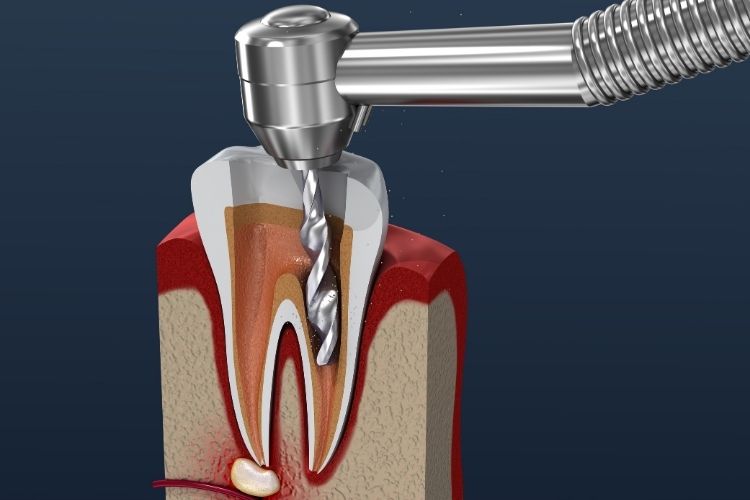
Root canal treatment, also called endodontic treatment, is used to save a tooth when the soft tissue inside it — the pulp — becomes infected or inflamed, usually as a result of deep decay, a crack, or repeated dental work on the same tooth. The infected tissue is removed, the inside of the tooth is cleaned and sealed, and in many cases the tooth needs a crown afterwards to protect it.
Alp Medical Travel is a medical tourism facilitator, not a dental clinic. Examinations, diagnoses, treatment recommendations and procedures are carried out by our partner dental clinics and dentists in Türkiye. Our role is to coordinate your treatment journey and communication with the treating clinic.
Every case is a little different, and how many appointments it takes depends on the tooth and how advanced the infection is:
The treating dentist will explain what your case involves once they've examined the tooth and taken an X-ray. Your Alp Medical Travel coordinator will help you understand the proposed plan and organise your appointments around it.
Root canal treatment is generally recommended when a tooth's pulp is infected or badly inflamed and there's a reasonable chance the tooth itself can be saved. Left untreated, this kind of infection tends to get worse and can lead to an abscess, so the alternative to root canal treatment is often extraction.
Whether a tooth is a good candidate depends on things like how much healthy structure remains, the shape and condition of the root, and the surrounding bone. Your dentist will explain the likely outcome for your specific tooth rather than a general guarantee, since not every tooth responds to treatment in the same way.
Not always. If too much of the tooth has broken down, if there's a crack that extends below the gumline, or if there isn't enough healthy tooth structure or bone and gum support left to restore it properly, the dentist may conclude the tooth isn't a good candidate for root canal treatment and suggest extraction instead, with an option like an implant or bridge to replace it. Infection or bone changes around the root often improve once the infection is properly treated, so this on its own isn't usually a reason to rule out root canal treatment.
Some cases are also more complex than others — for example, canals that are unusually curved or calcified — and the dentist may recommend referral to a specialist for these. None of this can be determined without an examination and an X-ray, which is why treatment starts there rather than with a fixed plan.
Root canal treatment has a reputation for being painful, but it's usually the infection itself that causes discomfort beforehand — the procedure is carried out under local anaesthetic, and for many patients feels similar to having a filling.
The dentist takes an X-ray, then numbs the area. A small protective sheet called a rubber dam is typically placed around the tooth — this is standard practice in root canal treatment, keeping the area clean, dry, and isolated from bacteria in saliva while the tooth is open. An opening is made into the tooth to reach the infected pulp, which is removed, and the canals inside the root are cleaned, shaped, and disinfected. Once this is done, the canals are filled and sealed, and the tooth is closed with a filling. Depending on the tooth, a crown is often recommended afterwards, since the tooth structure removed during treatment — combined with any decay or fracture that led to it in the first place — can leave the tooth more prone to breaking under normal biting forces.
Most people can return to normal activities the same day. Some tenderness or sensitivity around the tooth is common for a few days afterwards, particularly when biting down, and your dentist can advise on appropriate pain relief if needed.
If pain increases rather than settles, or you notice swelling, this should be reported to the treating clinic rather than waited out.
General advice after root canal treatment tends to include:
Once you're home, your Alp Medical Travel coordinator remains your point of contact and can help arrange communication with the treating clinic if you have any concerns.
You will have one named coordinator from your first enquiry through your return home. With your consent, we arrange the preliminary review of your case by a partner dental clinic and coordinate:
This means you know who to contact at each stage without having to explain your case again to a new person.
Cost depends on the tooth being treated, how many canals it has, whether it's a first treatment or a retreatment, and whether a crown is needed afterwards to protect the tooth. Following a preliminary review, the partner dental clinic will prepare the proposed treatment and costs, and Alp Medical Travel will coordinate an itemised quotation showing what's included, along with any travel-support services. The final treatment plan and price are confirmed after your clinical examination in Türkiye.
This page provides general information and does not replace an examination, diagnosis, or individual advice from a qualified dentist.