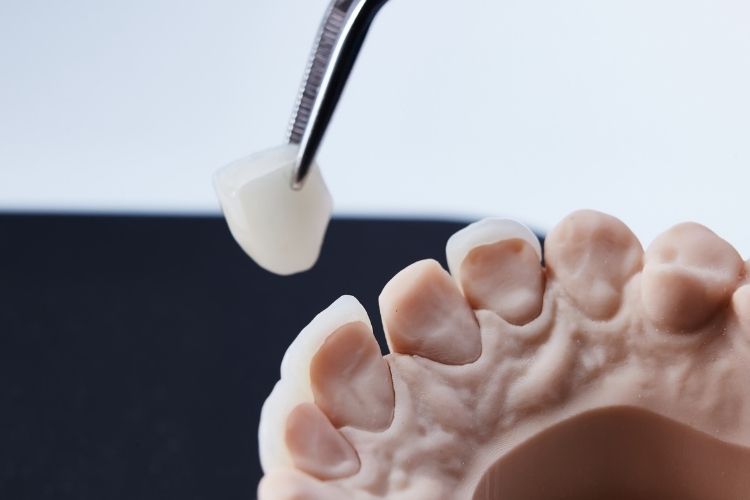
Dental veneers are thin layers of tooth-coloured material placed over the front surface of the teeth to change their appearance. Porcelain veneers are usually custom-made in a dental laboratory and fitted to the teeth, while composite veneers are built up and shaped directly in the mouth, often in a single visit. They're most commonly considered for discolouration that doesn't respond to whitening, small chips, gaps, or teeth that are uneven in shape or size.
Alp Medical Travel is a medical tourism facilitator, not a dental clinic. Examinations, diagnoses, treatment recommendations and procedures are carried out by our partner dental clinics and dentists in Türkiye. Our role is to coordinate your treatment journey and communication with the treating clinic.
What Types of Veneers Are Available?
Which material makes sense depends on your teeth, your bite, and what you're trying to achieve. The dentist will talk you through the options after examining your teeth:
- Lithium disilicate ceramic – valued for its translucency, which is why it tends to come up for front teeth where a natural look matters most.
- Zirconia – a strong ceramic material; whether it's suitable depends on the case and which teeth are involved.
- Composite resin – shaped directly onto the tooth rather than lab-made, so it can often be done in fewer visits. It's easier to repair if it chips, though it doesn't hold up to staining and wear quite as well as porcelain over time.
The treating dentist decides which option fits your case after assessing your oral health, bite, and what you're hoping for. Your Alp Medical Travel coordinator will help you understand the proposed plan and organise the next steps.
What Can Veneers Improve?
Veneers can improve the look of teeth affected by discolouration, small chips, gaps, or an uneven shape. Porcelain in particular reflects light in a way that's close to natural enamel, which helps it blend in rather than look like an obvious add-on.
That said, results vary from person to person. How long veneers last and how they hold up depends on things like the remaining tooth structure, your bite, whether you grind your teeth, and how well they're looked after. Your dentist will give you a realistic idea of what to expect for your own teeth, rather than a general promise.
Are Veneers Suitable for Everyone?
Not always. Your teeth and gums first need to be checked for decay or gum disease. Grinding, clenching, a bite that's out of alignment, or a tooth that's already significantly damaged can all affect whether veneers are the right call.
Depending on what the assessment shows, the dentist might suggest whitening, composite bonding, orthodontic treatment, or a crown instead. There's no way to know which of these fits your case without an actual examination.
How Are Veneers Fitted?
For porcelain veneers, the dentist typically removes a small amount of enamel from the front of the tooth, takes an impression or digital scan, and sends this off to have the veneers made. How much enamel is removed varies from patient to patient — because this step can't be reversed, the dentist will walk you through exactly what's planned before you agree to go ahead.
Local anaesthetic may be used, and temporary sensitivity can occur after treatment. If you're anxious about the procedure, raise this with the dentist beforehand so they can discuss suitable comfort options with you. Composite veneers work differently, since they're built up directly on the tooth rather than made separately; your dentist will explain what that looks like in practice for the option they recommend.
What Is the Recovery Time?
Most people are back to their normal routine within a day or so. Some sensitivity to hot or cold is common early on, and it can take a few days to stop noticing the veneers when you talk or eat.
If your bite feels off or discomfort continues beyond the first few days, contact the treating clinic rather than assuming it will settle on its own. Your Alp Medical Travel coordinator can help coordinate this communication.
Aftercare
The clinic will give you aftercare instructions specific to your treatment before you leave Türkiye. In general, this usually comes down to:
- Brushing twice a day and cleaning between your teeth
- Not using the treated teeth to bite down on anything very hard
- Keeping up with regular dental check-ups and hygiene visits
- Following any other instructions your dentist gives you specifically
Once you're home, the same coordinator stays your point of contact and can help arrange communication with the clinic if anything comes up. Any medical advice or treatment decisions, though, stay with the treating dentist — that doesn't change once you've returned home.
How Alp Medical Travel Supports Your Dental Journey
You will have one named coordinator from your first enquiry through your return home. With your consent, we arrange the preliminary review of your case by a partner dental clinic and coordinate:
- Your written treatment proposal and itemised quotation
- Clinic appointments and treatment schedule
- Accommodation and transfers, where requested
- Language and communication support during your stay
- Communication with the treating clinic after you return home
This means you know who to contact at each stage without having to explain your case again to a new person.
How Much Do Veneers Cost in Turkey?
Cost depends on the material recommended, how many teeth are involved, and whether anything else needs addressing first. Following a preliminary review, the partner dental clinic will prepare the proposed treatment and dental costs, and Alp Medical Travel will coordinate an itemised quotation showing what's included, along with any travel-support services. The final treatment plan and price are confirmed once you've had a clinical examination in Türkiye.
This page provides general information and does not replace an examination, diagnosis, or individual advice from a qualified dentist.